


What Is Keratin Tip? A Guide to This Durable, Natural-Looking Extension Method
Among the most popular hair extension methods available today, Keratin Tip consistently stands out as one of the top choices for durability and a natural finish. So what exactly is Keratin Tip, what types are available, how does it work, and is it really the right fit for you? This article from HQ Hair covers everything you need to know — including a breakdown of the different types of Keratin Tip — before you decide on this extension method.
Why Is Keratin Tip Considered a Premium Extension Method?
In the hair extension industry, there are many different ways to attach hair to your natural hair, each with its own trade-offs in durability, application time, and overall wearing experience. Among them, Keratin Tip is widely regarded as one of the premium options, favored by professional salons and experienced clients alike.
Keratin Tip has earned this reputation thanks to its distinctive attachment method, which offers greater hold and a more natural finish compared to some other techniques. This article takes a closer look at every aspect of Keratin Tip so you have the full picture before making a decision.
1. What Is Keratin Tip?
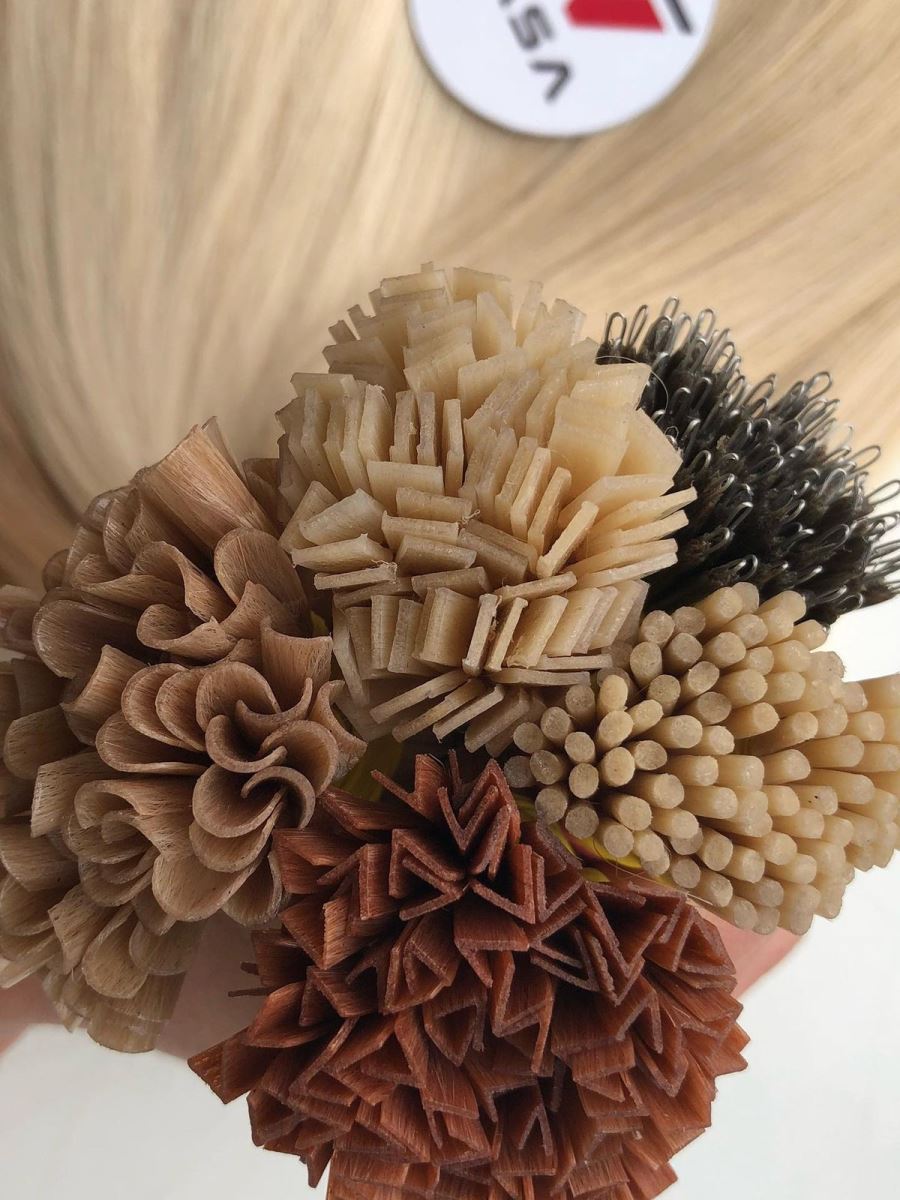
Keratin Tip (commonly abbreviated as K-Tip) is a hair extension method in which individual strands come pre-fitted with a keratin tip — a natural protein also found in the structure of hair itself. This keratin tip is then fused onto a client's natural hair using heat from a specialized tool, causing the keratin to soften slightly and bond tightly around each strand of natural hair.
Once attached, the tip cools and hardens, forming a secure bond between the extension and natural hair. The bond itself is small and, when done correctly, typically not very noticeable.
2. Types of Keratin Tip Extensions
Keratin Tip isn't a single, uniform product — several variations exist on the market, each suited to a different need and application technique.
I-Tip (Stick Tip)
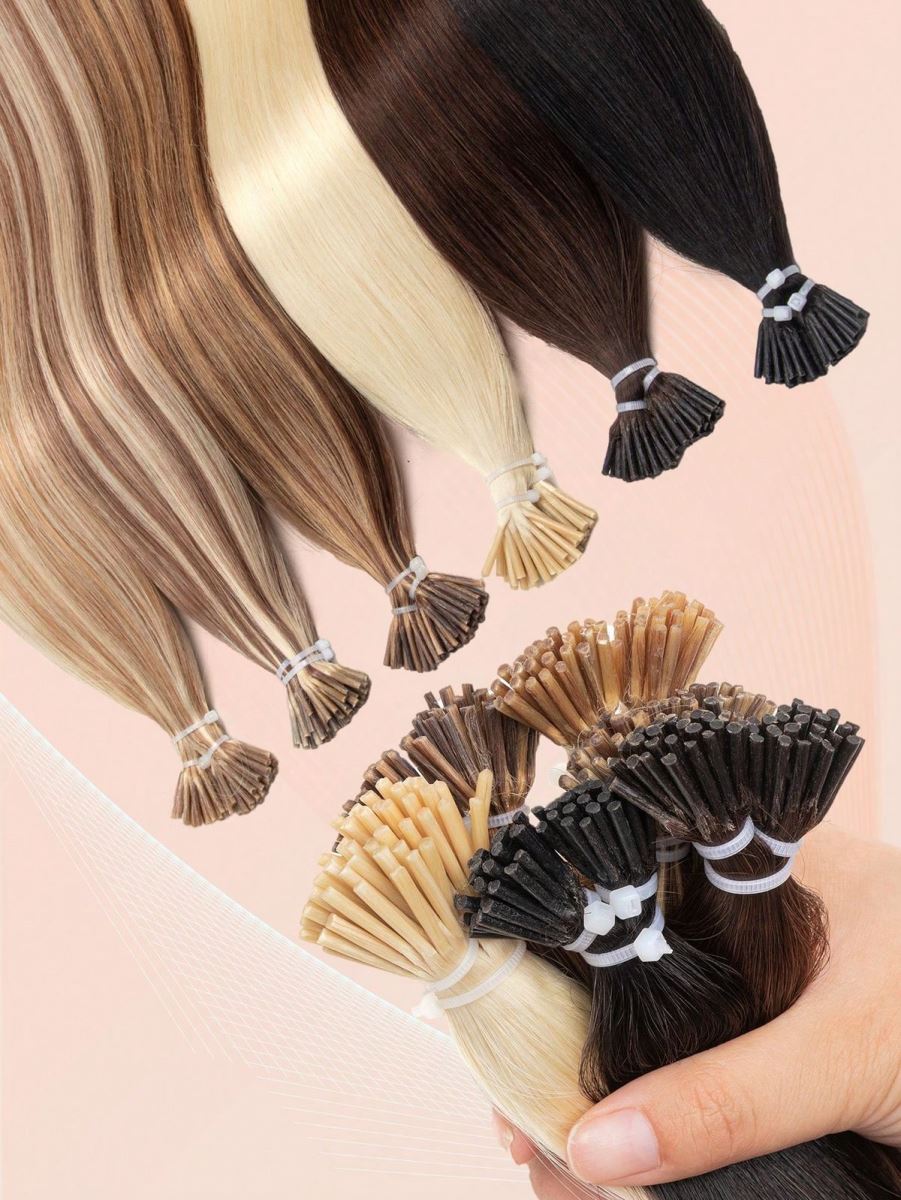
This is the most common type, with a keratin tip shaped like a slim stick. I-Tip extensions are typically attached either by threading through a small tube (a micro-link) or by fusing directly with heat, depending on the salon's technique.
Key traits: A compact, flexible tip size suited to a wide range of hairstyles and natural hair thicknesses.
U-Tip
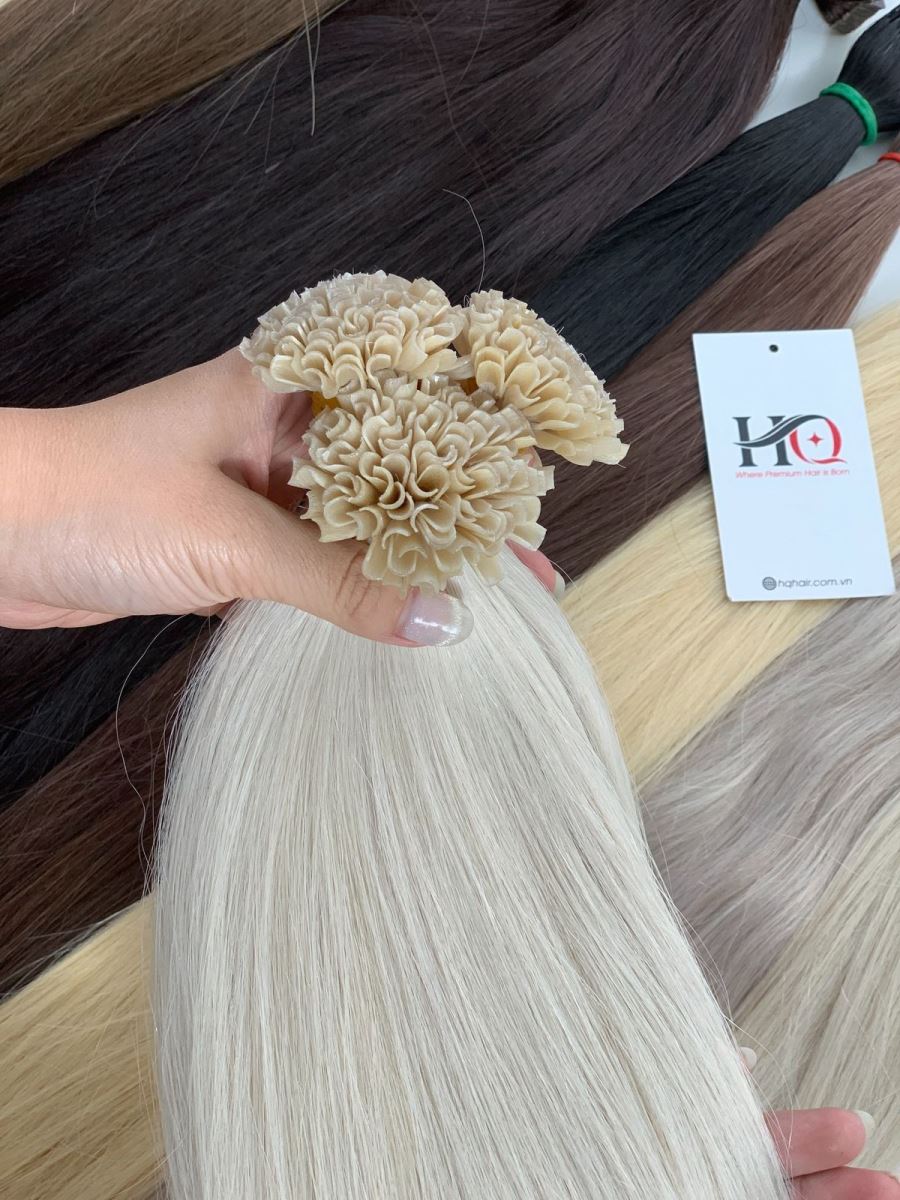
U-Tip extensions have a keratin tip shaped like the letter U, typically a bit larger than an I-Tip. This is also a traditional style that's been widely used for many years.
Key traits: A secure hold, well suited to medium-to-thick natural hair.
Flat-Tip (Italian Keratin)
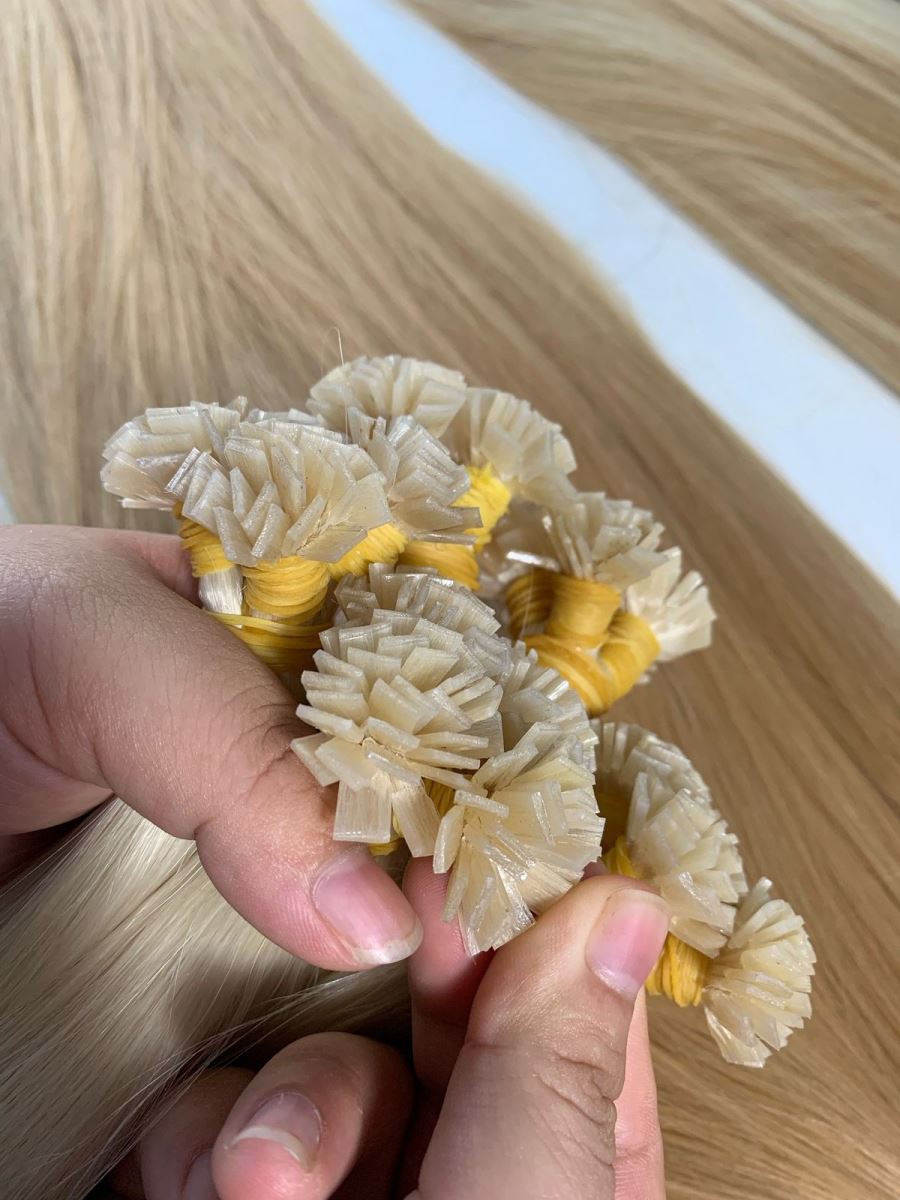
Flat-Tip extensions have a keratin tip that's flattened compared to I-Tip or U-Tip, making the bond thinner and less noticeable to the touch.
Key traits: A softer feel at the bond point, often praised for comfort during extended wear.
Nano Tip
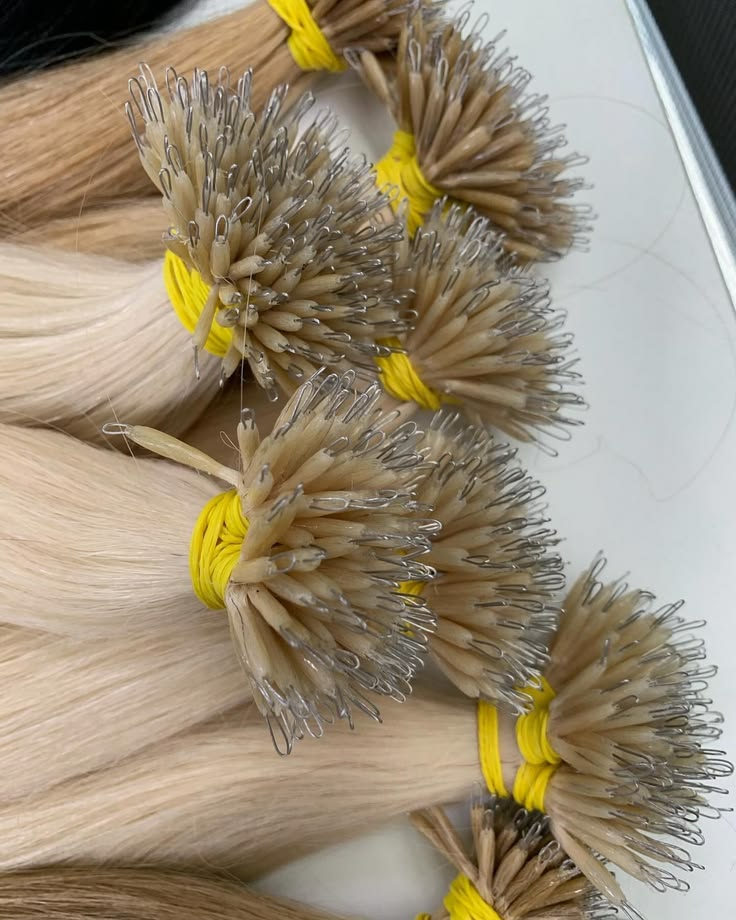
Nano Tip is a miniaturized version of traditional Keratin Tip, with a significantly smaller bond size. This type is generally well suited to fine natural hair or anyone who wants an especially discreet bond.
Key traits: Small and lightweight, but requires meticulous application technique and can take longer to install due to the higher number of bonds needed.
Choosing the right type of Keratin Tip should be based on your natural hair thickness, durability needs, and the skill and equipment of the salon performing the application. If you're not sure which one is right for you, it's best to consult directly with a technician or your product supplier before deciding.
3. How Does the Keratin Tip Application Process Work?
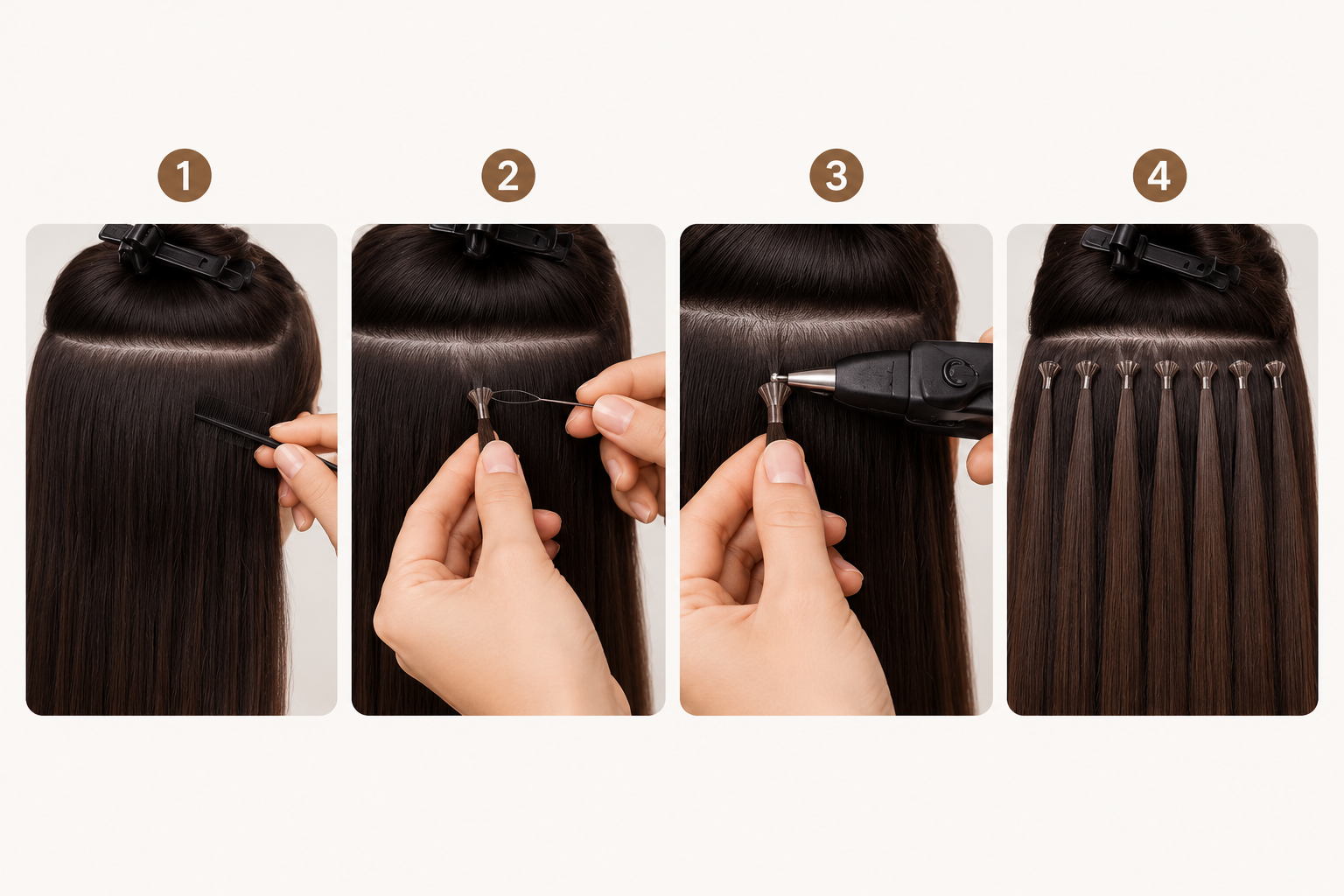
The Keratin Tip application process is typically performed by a trained technician and follows these basic steps:
Step 1: Sectioning the Natural Hair The technician divides the client's natural hair into small sections at pre-planned positions, ensuring even distribution across the entire scalp.
Step 2: Positioning Each Keratin Tip Strand Each Keratin Tip strand is placed close to the root of the natural hair at the sectioned position.
Step 3: Fusing with Heat A specialized fusion tool is used to heat the keratin tip, allowing it to soften slightly and wrap around the natural hair strand.
Step 4: Cooling and Setting After fusing, the bond is cooled quickly, allowing the keratin to harden and form a secure connection.
This process requires precision and experience from the technician to ensure a strong bond while minimizing discomfort or damage to the client's natural hair.
4. Advantages of the Keratin Tip Method
High Durability Thanks to the heat-fused bonding mechanism, Keratin Tip generally offers better durability than some adhesive- or clip-based methods, making it well suited to long-term wear.
A Natural Look The small bond size, when applied correctly, is typically hard to notice — helping the overall look appear more natural.
Styling Flexibility Because the bond is compact, Keratin Tip extensions generally impose fewer limitations on styling, including high ponytails and more elaborate looks.
Reusable In many cases, Keratin Tip extensions can be removed, have their keratin tips reprocessed, and be reapplied — extending the usable life of the same set of extensions.
5. A Few Things to Keep in Mind When Using Keratin Tip
Should Be Applied by a Trained Technician Since the application process involves heat and requires precision, Keratin Tip should be applied by someone with experience — it's not recommended as a DIY project without the appropriate skills.
Requires Proper Care to Maintain Durability Like other extension methods, Keratin Tip needs proper care — from washing and brushing to how it's tied up while sleeping — to maintain the strength of the bond over time.
Removal Requires the Right Technique When it's time to remove Keratin Tip extensions, proper technique should be used (typically involving a specialized solution to soften the keratin), avoiding any yanking or forceful pulling that could damage natural hair.
6. Quick Comparison: Keratin Tip vs. Tape-in
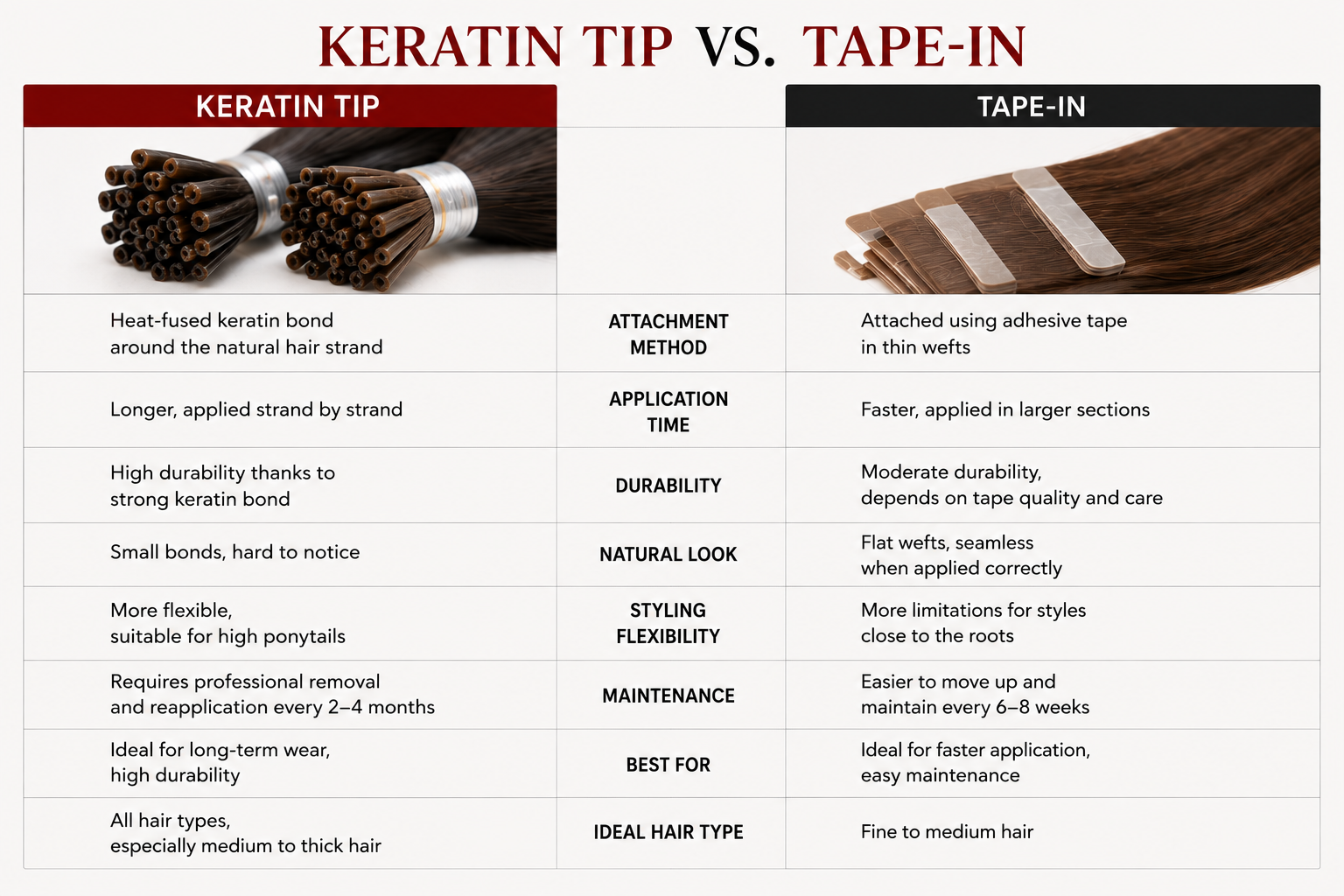
🔹 Attachment Method
Keratin Tip: Heat-fused, with keratin wrapping around the strand
Tape-in: Attached with specialized adhesive tape in thin strips
🔹 Application Time
Keratin Tip: Longer, applied strand by strand
Tape-in: Faster, applied in larger sections
🔹 Durability
Keratin Tip: Generally more durable thanks to the secure heat bond
Tape-in: Moderately durable, depending on adhesive quality
🔹 Natural Look
Keratin Tip: Small bonds, hard to notice
Tape-in: Flat strips, also fairly natural when applied correctly
🔹 Styling Flexibility
Keratin Tip: More flexible, fewer limitations for high ponytails
Tape-in: Can be more limiting for certain styles tied close to the roots
Both methods have their own value, depending on how much application time, budget, and durability matter most to a given customer.
7. Who Is Keratin Tip Best Suited For?
Keratin Tip generally works well for customers who:
Plan to wear extensions long-term and prioritize high durability
Want an overall natural look, with bonds that are hard to notice
Need styling versatility, including high ponytails
Are willing to invest the extra time required for a more meticulous application process compared to some other methods
8. Frequently Asked Questions
Does Keratin Tip damage natural hair? When applied correctly by an experienced technician, Keratin Tip typically doesn't cause significant damage to natural hair. However, improper application or removal can affect the health of your natural hair, so it's best to have this done by an experienced technician.
How long do Keratin Tip extensions last? Depending on your natural hair growth rate and how well they're cared for, Keratin Tip extensions typically need maintenance or re-application after a certain period, to ensure both durability and a polished appearance.
Can I apply Keratin Tip extensions myself at home? Since the process requires heat and precise application, Keratin Tip generally isn't recommended as a DIY project without prior experience — it's best done at a professional salon.
9. Conclusion
Keratin Tip is one of the most highly regarded hair extension methods when it comes to durability and a natural finish, well suited to anyone prioritizing long-term wear and a seamless look with barely noticeable bonds. That said, achieving the best results requires the application and care process to be done correctly — ideally with the help of an experienced technician.
If you're exploring Keratin Tip or need guidance choosing the right extension method for your needs, the HQ Hair team is always here to help.
👉 Reach out to HQ Hair today for detailed guidance on Keratin Tip and whether it's right for you.
+84 389 023 690