

Why Do Hair Colors Look Different on Different Hair Textures?
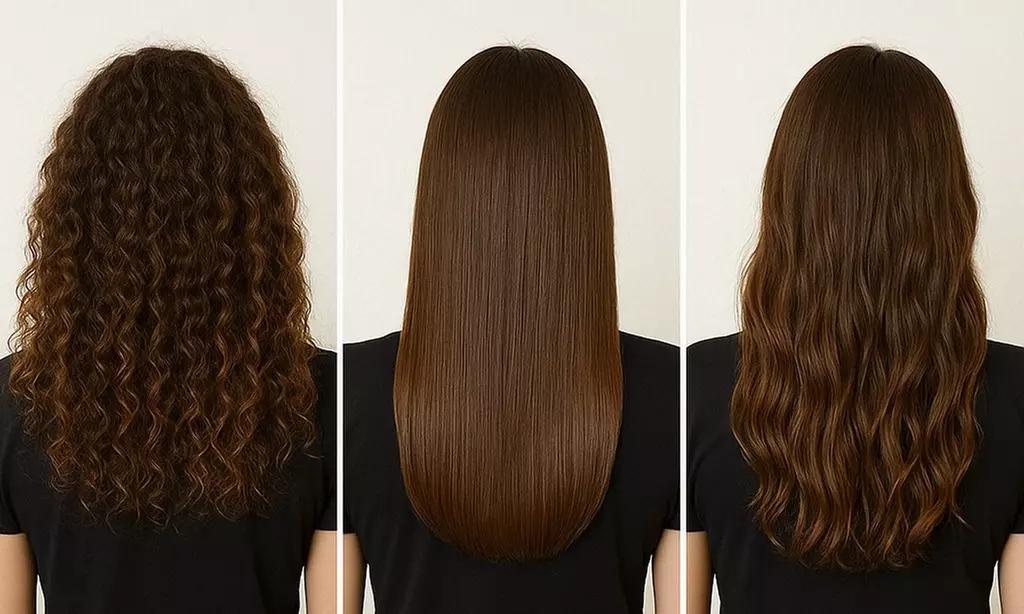
Have you ever compared the same hair color on straight, wavy, and curly hair and noticed that the colors do not seem exactly the same?
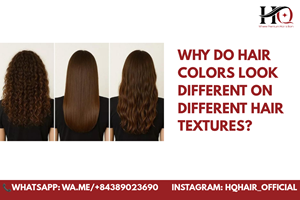
A shade that looks bright and clean on straight hair may appear softer and more dimensional on wavy hair. On curly hair, the same color can sometimes look deeper or richer.
At first, this may seem strange. If the color code is the same, shouldn't the hair look exactly the same?
Not necessarily.
The actual color of the hair may be the same, but the way we perceive that color can change depending on the hair texture. The shape of the hair, the condition of the cuticle, the way light reflects from the surface, and the amount of natural shadow all influence how a color appears to the eye.
Understanding this difference is especially important when choosing or matching hair extensions, because a color that looks perfect in a photo may look slightly different when applied to another texture.
1. Why Can the Same Hair Color Look Different?
The simplest answer is light reflection.
Hair color is not only about the pigment contained within the hair. What we see is also influenced by how light interacts with the surface of the hair.
Straight, wavy, and curly hair have different surface shapes. Because of this, light does not hit and reflect from them in exactly the same way.
Straight hair generally has a more consistent surface direction, allowing light to reflect more directly. Wavy hair has more changes in direction, creating a mixture of highlights and shadows. Curly hair has even more curves and angles, which can scatter light and create deeper-looking areas between the curls.
As a result, the same color can create different visual impressions depending on the texture.
1.1. Hair Color and Color Perception
There is an important difference between actual color and perceived color.
Actual color refers to the pigment or color that has been applied to the hair. Perceived color is how that color appears to our eyes under particular lighting and surface conditions.
For example, a brown shade may look lighter when it reflects a strong light directly. The same brown may appear deeper when parts of the hair are covered by natural shadows.
This does not mean that the pigment has changed. The visual environment has changed.
That is why looking only at a color code is sometimes not enough when comparing hair colors.
1.2. Texture Changes How Light Hits the Hair
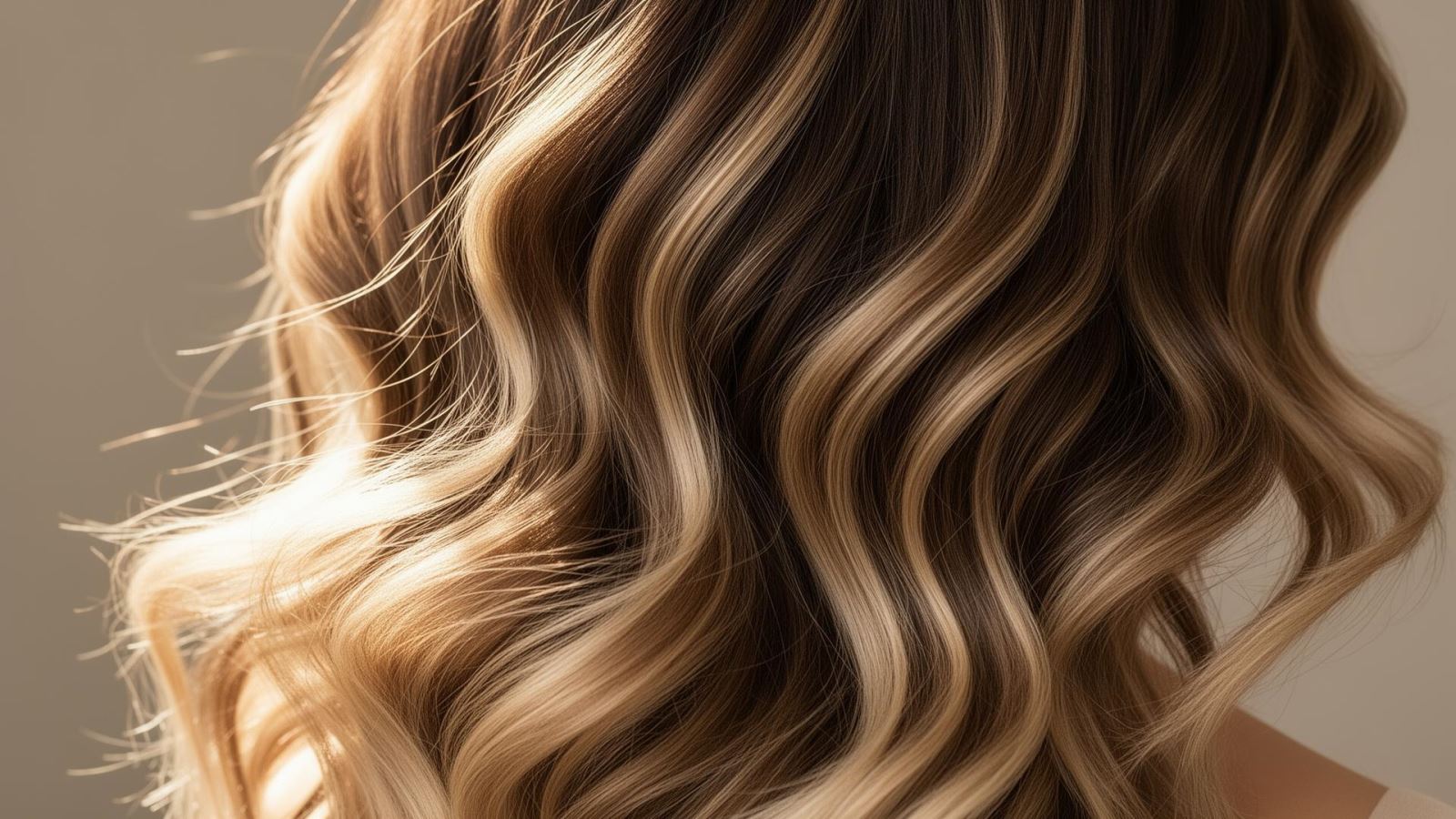
Hair texture changes the direction of the hair surface.
With straight hair, many strands lie in a similar direction. This creates relatively consistent areas of reflection.
With wavy hair, the strands move through different curves. Light hits these curves from different angles, creating more variation between bright and darker areas.
Curly hair has even more changes in direction. Some sections face the light while others turn away from it, creating stronger contrast between highlights and shadows.
This difference in light reflection is one of the main reasons the same color can look different on different textures.
2. How Does Light Reflection Change Hair Color?
Light is one of the most important factors in how we perceive hair color.
When light reaches the surface of the hair, some of it is reflected back toward our eyes. The direction and intensity of this reflection depend partly on the shape and smoothness of the hair surface.
2.1. Straight Hair and Light Reflection
Straight hair usually provides a more uniform surface for light reflection.
When the cuticle is smooth and the strands lie relatively flat, light can travel across the surface more consistently. This often gives straight hair a noticeable shine.
Because there are fewer natural curves and shadows, the color may appear:
• Brighter
• Clearer
• More uniform
• More reflective
This is why some colors can appear particularly vivid on straight hair.
2.2. Wavy Hair and Light Reflection
Wavy hair creates a different visual effect.
The waves change the direction of the hair surface from one section to another. As light reaches these different angles, some areas reflect more light while others receive less direct reflection.
This creates a combination of highlights and shadows throughout the hair.
As a result, the same color may appear:
• Softer
• More dimensional
• More natural
• Slightly richer
Rather than seeing one uniform block of color, the eye sees multiple variations created by the natural wave pattern.
2.3. Curly Hair and Light Reflection
Curly hair has even more variation in surface direction.
Each curl contains multiple curves, and different parts of the curl face different directions. Some areas may catch the light strongly, while others remain in shadow.
Because of this, the overall color can appear deeper or more intense.
This does not necessarily mean curly hair is actually darker. It means that the combination of reflection and shadow can create a deeper visual impression.
3. Why Does Straight Hair Often Look Shinier and Brighter?
One of the most noticeable differences between hair textures is shine.
Straight hair often appears shinier because its surface can reflect light in a more consistent direction.
3.1. A Smoother Surface
When the hair cuticle is relatively smooth and aligned, the surface becomes more even.
A smooth surface allows light to reflect more consistently, which creates the appearance of shine.
This is one reason why healthy straight hair can look particularly glossy under direct lighting.
3.2. More Consistent Light Reflection
Because straight hair does not have as many curves, large sections of the hair can reflect light in a similar direction.
This can make the color appear more visually consistent from root to tip.
In comparison, wavy and curly textures naturally contain more changes in direction, so the light is distributed differently.
3.3. How Shine Affects Color Perception
Shine can influence how we perceive color.
A highly reflective surface can make a color appear brighter and cleaner. Dark shades may show stronger highlights, while lighter shades may appear more luminous.
Therefore, when comparing a color on straight hair with the same color on a more textured hair type, the straight version may look brighter even though the underlying color is the same.
4. Why Can Wavy Hair Make the Same Color Look More Dimensional?
Wavy hair has a natural advantage when it comes to creating visual dimension.
The movement of the waves creates natural changes between light and shadow.
4.1. Multiple Light Angles
Every curve in a wave changes the direction of the hair surface.
Instead of reflecting light in one consistent direction, the hair reflects light from multiple angles.
This gives the color more visual variation.
4.2. Natural Highlights and Shadows
The higher parts of a wave can catch more light, while the lower sections may appear slightly darker.
These differences can make a single color look as if it contains several subtle tones.
For example, a medium brown may appear lighter on the outer curves of the waves and deeper between them.
The color itself has not changed. The natural structure of the texture is creating the variation.
4.3. A More Multidimensional Color Effect
This is why wavy hair can make a single color look more dimensional.
Instead of appearing completely flat, the color has movement.
For hair extensions, this effect can be especially noticeable with natural wave textures because the texture itself contributes to the overall appearance of the color.
5. Why Can Curly Hair Make Colors Look Deeper?
Curly hair creates even stronger variations in light and shadow.
The more pronounced the curls, the more directions the hair surface can face.
5.1. More Shadows Between Curls
Curly hair naturally creates spaces and curves where less light reaches the hair.
These areas can appear darker than the sections directly exposed to light.
The contrast between these areas can make the overall color look richer or deeper.
5.2. Less Direct Light Reflection
Not every part of a curl faces the light source.
Some sections reflect light directly, while others reflect very little light toward the viewer.
This creates a more complex visual pattern compared with straight hair.
5.3. Texture Can Visually Change Color Depth
This leads to a useful way of thinking about the three textures:
Straight → brighter and clearer
Wavy → softer and more dimensional
Curly → deeper and richer
These are visual impressions, not necessarily differences in the actual pigment.
The same shade can therefore have three different visual personalities depending on the texture it is applied to.
6. Does Hair Texture Change the Actual Hair Color?
This is an important distinction.
Hair texture does not automatically change the actual pigment of the hair.
If the same color is applied correctly to straight, wavy, and curly hair, the underlying color can remain essentially the same.
What changes is how that color is presented.
6.1. Texture Does Not Automatically Change the Pigment
Straightening or curling hair does not automatically create a completely different pigment.
The color remains within the hair fiber.
However, changing the shape of the hair changes the way light interacts with its surface.
6.2. Texture Changes How We See the Color
The perceived difference usually comes from several factors:
• Light reflection
• Natural shadows
• Shine
• Surface direction
• Hair density
• Curl or wave pattern
• Condition of the hair surface
Together, these factors influence what our eyes see.
6.3. Other Factors That Can Actually Change Hair Color
Texture is not the only factor involved.
The actual appearance of hair color can also be affected by:
• Lighting conditions
• Previous bleaching
• Coloring process
• Hair porosity
• Product buildup
• Hair condition
• Exposure to sunlight
• Photography and camera settings
This is why color matching should always consider more than texture alone.
7. Why Does the Same Hair Color Look Different in Photos?
This is especially important when buying hair online.
A hair color shown on a website or social media post may not look exactly the same in person.
7.1. Lighting Conditions
Different types of lighting can change the appearance of hair color.
Natural daylight, warm indoor lighting, cool white lighting, and direct sunlight can all create different visual effects.
A color that looks neutral under daylight may appear warmer under yellow indoor lighting.
7.2. Camera and White Balance
Cameras do not always reproduce colors exactly as the human eye sees them.
White balance, exposure, camera processing, and screen settings can all influence the final image.
This is why comparing colors from different photos can sometimes be misleading.
7.3. Texture and Photography
Texture adds another layer of complexity.
Straight hair may reflect a strong highlight directly into the camera, while curly hair may contain more shadows.
As a result, the same color photographed under similar conditions can still look different simply because the texture is different.
8. What Does This Mean When Choosing Hair Extensions?
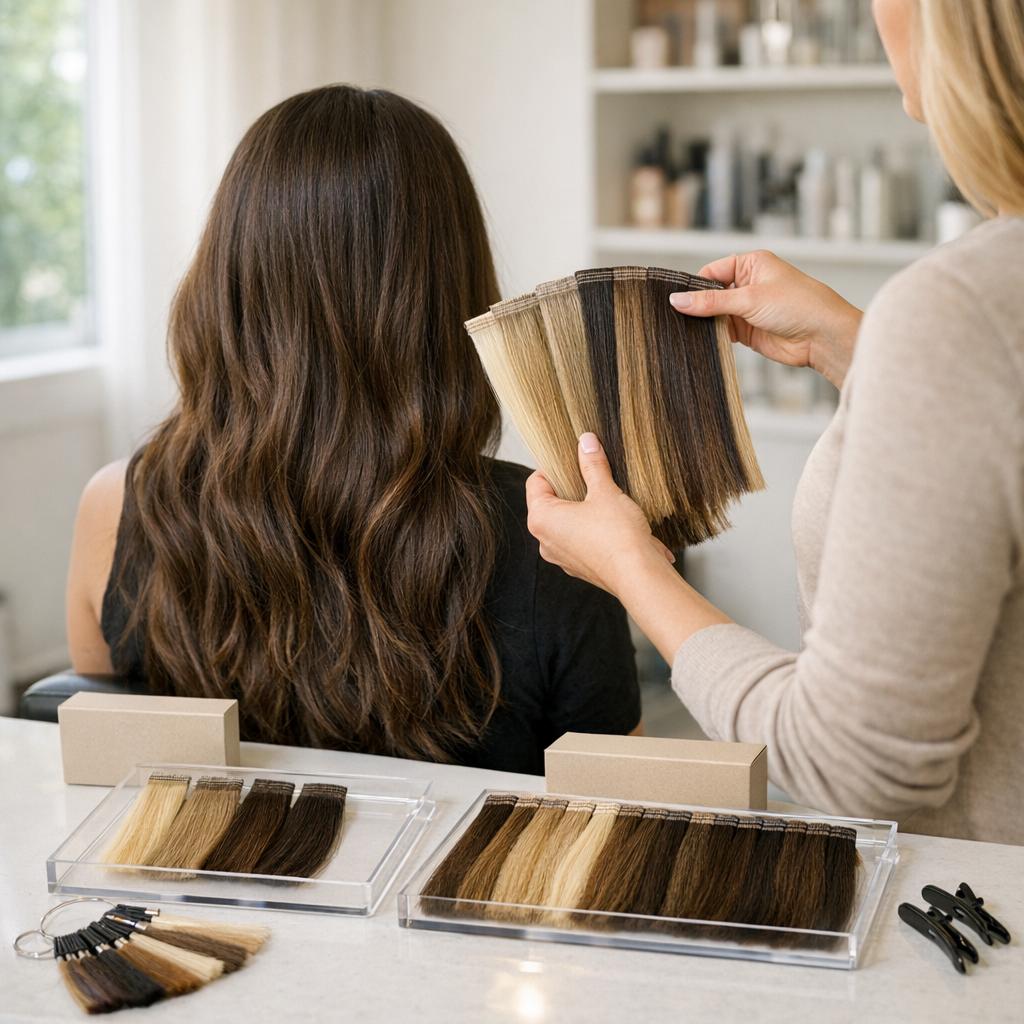
Understanding the relationship between color and texture is particularly useful for salons, wholesalers, and professional hair buyers.
When choosing hair extensions, it is important not to judge a color based only on a single photo or color code.
8.1. Do Not Judge a Hair Color by Texture Alone
If possible, compare colors under the same lighting conditions and on the same texture.
A color shown on straight hair may appear brighter than the same shade shown on curly hair.
This does not necessarily indicate a quality or color inconsistency.
8.2. Consider the Client's Natural Texture
The texture of the extension should also work with the client's natural hair.
If the client's natural hair is wavy, a wavy extension may blend more naturally than a completely straight texture.
Likewise, curly hair may require a texture that follows the client's existing curl pattern.
8.3. Color Matching Requires More Than a Color Code
A color code provides an important reference, but it is not the entire picture.
Professional color matching may also need to consider:
Color + Texture + Lighting + Hair Condition
These factors work together to determine the final visual result.
8.4. Why Professional Buyers Should Request Color Samples
For salons and wholesalers, requesting samples can be a practical way to evaluate a color before placing a larger order.
A physical sample allows you to check the actual shade under different lighting conditions and compare it with the hair of your target customers.
This can reduce misunderstandings caused by photos, screens, or differences in texture.
9. Straight vs. Wave vs. Curly: How the Same Color Can Feel Different
Hair Texture
Light Reflection
Visual Effect
Color Impression
Straight
More direct and consistent
Smooth and shiny
Brighter and clearer
Wavy
Multiple reflection angles
Soft and dimensional
Richer and more natural
Curly
More variation and shadow
Deep and textured
Deeper and more intense
The table above is a simplified way to understand the visual difference.
It does not mean that every straight hair color will always look brighter or every curly hair color will always look darker. Lighting, hair condition, density, and the specific texture all matter.
The key point is that texture changes the way light interacts with the hair, and light changes how we perceive color.
10. Frequently Asked Questions About Hair Color and Texture
10.1. Does curly hair make color look darker?
It can. The curves and natural shadows in curly hair can reduce direct light reflection in some areas, creating the impression of a deeper or darker color.
10.2. Why does straight hair look shinier than curly hair?
Straight hair generally provides a more consistent surface for light reflection. Curly hair has more curves and angles, so light is distributed in different directions.
10.3. Does hair texture affect color matching?
Yes. Texture can affect how a color is visually perceived. When matching hair extensions, it is useful to consider both the color and the texture.
10.4. Why does the same hair color look different in photos?
Lighting, camera settings, white balance, screen settings, texture, and natural shadows can all affect how a hair color appears in a photograph.
10.5. Should I compare hair colors under natural light?
Natural daylight can provide a useful reference because it tends to show color more clearly. However, checking the color under more than one lighting condition can provide a more complete picture.
10.6. Does hair texture change the actual color?
Not necessarily. Texture mainly changes how light interacts with the hair and therefore how the color is perceived.
10.7. Why does the same color look different on hair extensions?
Hair extensions with different textures can reflect light differently. Differences in processing, hair condition, porosity, and lighting can also influence the final appearance.
11. Conclusion
The same hair color does not always look the same on every texture.
The main reason is not necessarily a difference in pigment. Instead, it is the way texture changes light reflection, natural shadow, shine, and overall color perception.
Straight hair tends to create a smoother and brighter visual effect. Wavy hair can make the same shade look softer and more dimensional, while curly hair may give the color a deeper and richer appearance.
For anyone working with hair extensions, this is an important detail to remember. A color code is only one part of the final result.
When evaluating or matching hair, consider:
Color + Texture + Lighting + Hair Condition
Looking at all four factors together gives a much more accurate understanding of how a hair color will actually appear in real life.
+84 389 023 690